
Visibility has changed. Is your business keeping up?
“At NEM, we work with business leaders who are navigating change, growth and new ways of creating value. This guest article from Dot The i Studio looks at one shift many businesses are already feeling: the way AI is changing how people find, assess and choose who to work with online.”
If your website has felt a little quieter lately, you’re not imagining it.
Maybe enquiries have dropped without an obvious reason. Maybe a client recently told you they “found you on ChatGPT”. Maybe your once-reliable Google result no longer shows up where it used to. Or maybe you just have a sense that something has shifted, but you can’t quite put your finger on it.
Here’s the honest answer: your website probably isn’t the problem. The way people find businesses online has changed.
For many businesses, a website built four or five years ago worked perfectly well for a long time. Google sent the right people to it, those people picked up the phone or filled out a form, and the business grew from there.
That rhythm held steady for years. But over the last 18 months, it has stopped being the only rhythm that matters.
What’s actually changed
Until recently, being found online mostly meant ranking on Google. People typed a question into search, scanned the results, clicked through to a website and made a decision from there.
Two things have changed that pattern at the same time.
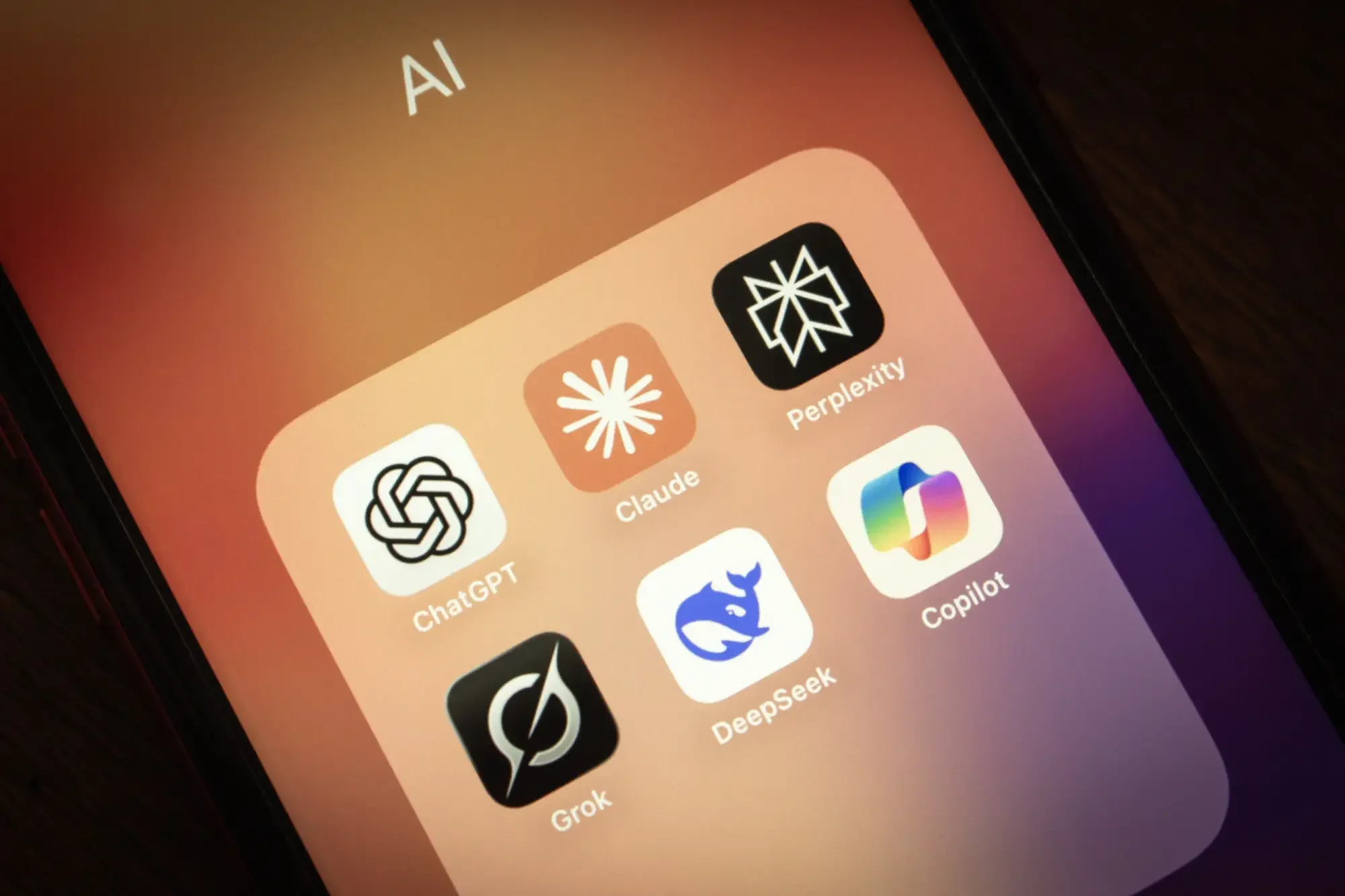
The first is the rise of AI tools like ChatGPT, Perplexity, Claude and Gemini. Instead of scanning a list of links, people now ask a question and receive a direct answer. OpenAI reported in February 2026 that ChatGPT had more than 900 million weekly active users, which gives a sense of how quickly this behaviour has moved into the mainstream.
The second is that Google itself is changing. AI Overviews now appear at the top of many search results, giving users a short AI-generated answer before they reach the traditional list of links. Estimates vary depending on the study, keyword set and industry, but recent research puts AI Overview visibility anywhere from about one-quarter of searches to nearly half of tracked queries.
That matters because people are clicking through less often when the answer is already in front of them. Pew Research Center found that users who saw an AI summary clicked a traditional search result in 8% of visits, compared with 15% when no AI summary appeared. Links inside the AI summary itself were clicked in just 1% of visits.
The practical effect is simple: people may still be learning about your business, your services and your expertise, but they may be doing it before they ever land on your website.
For business leaders, that changes the role of the website. It is no longer just a destination. It is also a source that search engines and AI tools read, interpret and summarise.
A quick self-check
Here are five signs this shift may already be affecting your business. None of them proves there is a problem on its own, but if two or more feel familiar, it is worth taking seriously.
Your monthly enquiries have dropped without an obvious cause.
Same business, same website, same marketing activity, but things feel quieter than they used to.You have started hearing “I found you on ChatGPT” or “I asked an AI”.
Even if it has only happened once or twice, it is a sign that the discovery pathway is changing.Your Google traffic has gradually decreased while your website has stayed the same.
Compare the last quarter with the same quarter a year ago. A slow downward drift can be easy to miss month to month.AI tools or Google get your business wrong.
Outdated hours, missing services, incorrect locations or vague descriptions are all signs that your digital signals may not be clear enough.Your website looks much the same as it did three or four years ago.
The internet has moved on. If your website has not, it may be falling behind in ways that are not immediately visible.
Your website may be the same. The route to it has changed.
Why this matters for business visibility
AI tools do not create answers from nothing. They read, interpret and summarise information from websites and other online sources. The sites they understand, trust and cite are the ones more likely to show up in this new discovery environment.
That is where older websites can struggle.
A site may still look fine to a human visitor, but if it lacks clear structure, plain-language service descriptions, strong credibility signals and up-to-date business information, it may be harder for AI tools to interpret accurately.
This is not about abandoning SEO. Search engine optimisation still matters. It is just no longer the whole picture.
Being found now means serving two audiences at once: the person reading your website, and the AI tools summarising your business for someone who may never click through.
The work of preparing a website to be read, understood and quoted by AI tools is often called Answer Engine Optimisation, or AEO. It is not magic, and it is not a replacement for good website fundamentals. It is an extension of them.
The challenge is that many websites were built before this shift became obvious. So they have been quietly falling behind without anyone doing anything “wrong”.
Koshiro K - stock.adobe.com
What you can actually do
The right next step depends on where you are starting from, but here is a practical framework.
Quick wins
Start with clarity and consistency.
Your business name should appear in plain text on key pages, not only inside a logo or image. Your contact details, locations, opening hours and services should be current and easy to find. Your homepage should clearly say what you do, who you help and where you operate.
None of this is dramatic, but it matters. AI tools rely on these signals to understand and represent your business accurately.
If you are unsure, ask whoever built or maintains your website to check the basics.
Worth a proper look
This is where the more technical work comes in.
Schema markup, structured content, metadata, page hierarchy and technical setup all help search engines and AI tools understand what your business offers and why it is credible.
Many older websites either do not have these elements in place, or have them set up for the version of search that existed a few years ago. A focused audit can usually identify the highest-impact gaps quickly.
A bigger conversation
If your website plays a meaningful role in growth, credibility or lead generation, it should be treated as business infrastructure, not a one-off project.
The businesses that adapt their digital presence to this new environment, and keep adapting, will build an advantage over time. The ones that do not may not notice the change immediately, but they may feel it gradually through fewer enquiries, lower visibility and less control over how they are represented online.
This is not about chasing every digital trend. It is about making sure your business can still be found, understood and trusted in the places where people are now making decisions.
For growth-focused businesses, that makes your website more important, not less.
Guest article from Dot The i Studio
Common questions
-
Almost certainly not.
If your website has worked well for years and you have recently noticed enquiries dropping or traffic slowing, the issue may not be the website itself. It is more likely that the way people find businesses online has shifted faster than your website has adapted.
AI search tools and Google’s AI Overviews are now answering more questions directly, which means fewer people are clicking through to websites in the first place.
Your website may be the same. The route to it has changed.
-
SEO, or Search Engine Optimisation, is the practice of helping your website rank well in traditional search engines like Google.
AEO, or Answer Engine Optimisation, is about making your website easier for AI tools like ChatGPT, Perplexity and Google’s AI Overviews to read, understand, quote and cite.
SEO is still important and still drives real traffic. AEO does not replace it. It extends it.
Many older websites have reasonable SEO foundations, but have not been updated for the way AI search tools now interpret and present information. That is often where the gap appears.
-
Usually, no.
Many websites can be significantly improved through targeted changes, such as clearer page structure, better service content, schema markup, technical updates and stronger credibility signals.
A focused audit can often identify the highest-impact gaps quickly.
A full rebuild is only worth considering if your website is outdated in other ways too — for example, if it is slow, difficult to maintain, hard to update or no longer reflects the business well.
The aim is the right work, not the most work.
-
Some technical and structural changes, such as schema, content structure and crawler permissions, can take effect within weeks.
The broader work of becoming recognised as a trusted source by AI tools usually takes longer. These platforms need time to learn, re-learn and decide which sources they trust and cite.
No one can honestly guarantee specific rankings, traffic or visibility outcomes in AI search yet. The space is still developing.
What you can do is make sure your website is set up properly, so it has the best chance of being found, understood, quoted and trusted.
-
It is still early, but that does not mean it is too soon to act.
AI search is still taking shape, but businesses that move early are likely to build an advantage over time. AI tools learn from the sources they can access, understand and trust. The websites being read and cited now are more likely to keep showing up as these tools mature.
Waiting is not necessarily neutral. It can mean slowly losing visibility while others adapt.
That does not mean rebuilding everything overnight. It means treating your website as ongoing business infrastructure, and making small, deliberate improvements now.